
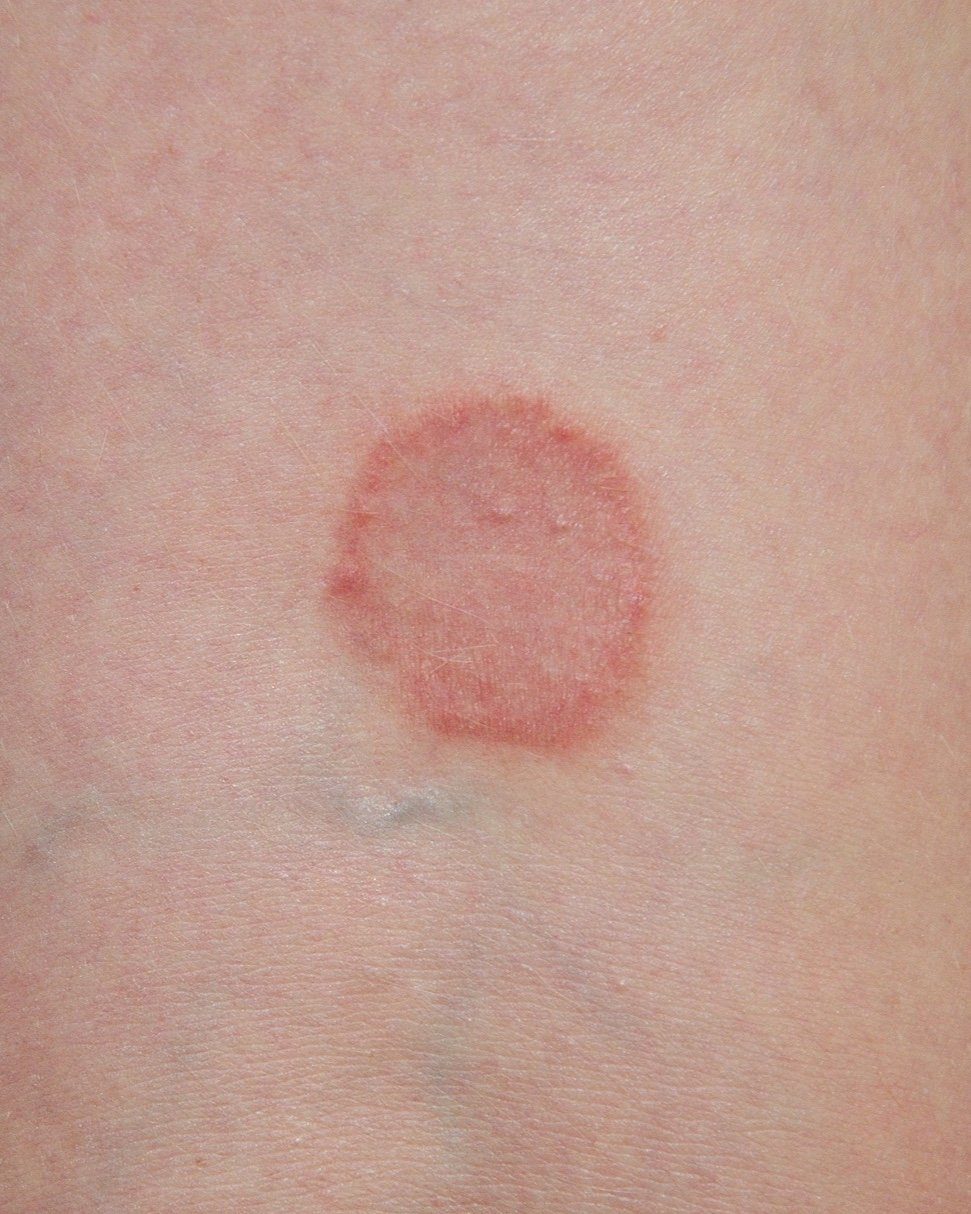
If you’ve noticed a circular, itchy red patch on your skin after a few days in the tropics, you’re likely dealing with a common fungal infection called ringworm (Tinea Corporis). Some people call this a “Bali Kiss” — but that’s actually local slang for a motorbike exhaust burn, a completely different injury. Here’s everything you need to know about identifying and treating a ringworm rash.
What Is Ringworm (Tinea Corporis)?
Ringworm, medically known as Tinea Corporis, is a common fungal skin infection, as described by the CDC’s overview of ringworm. Despite the name, it is not caused by a worm — it’s caused by a fungus that lives on the dead tissues of your skin. It typically appears as a red, scaly ring that clears in the center, giving it a distinctive “ring” appearance.
Note: this is different from a “Bali Kiss,” which is what locals call a burn from touching a hot motorbike exhaust pipe. If your mark is a burn rather than an itchy rash, it needs burn care, not antifungal treatment — give us a call and we’ll point you the right way.
Causes & Risk Factors
The tropical climate of Bali is the perfect breeding ground for fungi. You are at higher risk if you experience:
- Heat and Humidity: Fungi thrive in warm, moist environments and sweaty skin.
- Skin-to-Skin Contact: It is highly contagious and can be spread through direct contact with an infected person or animal.
- Contaminated Surfaces: Sharing towels, yoga mats, gym equipment, or bed linens in villas or hostels.
- Compromised Skin: Small cuts or abrasions from surfing or hiking allow the fungus to enter the skin easily.
Common Symptoms
How do you know if you have ringworm? Look for these signs:
- Circular Rash: A ring-shaped patch with slightly raised, red, or scaly edges.
- Itching: Persistent itchiness or a burning sensation in the affected area.
- Expansion: The ring may slowly grow larger or spread to other parts of the body.
- Blisters: In some cases, tiny bumps or blisters may form around the rim of the circle.
Initial Treatment & Care
If you catch it early, ringworm is easy to manage:
- Keep it Dry: Fungi love moisture. Pat the area dry after showering and avoid wearing tight, sweaty clothes.
- Don’t Scratch: Scratching can lead to a secondary bacterial infection, which may require antibiotics.
- Medical Consultation: If the rash is spreading rapidly, becomes painful, or starts oozing, book a doctor’s assessment to ensure it isn’t a different skin condition and get a prescription-strength antifungal if needed.
Prevention: Staying Fungus-Free
- Shower After Sweating: Wash off salt water, sand, and sweat immediately after your Bali adventures.
- Don’t Share Personal Items: Use your own towels and avoid sharing clothes or unwashed yoga mats.
- Wear Breathable Fabrics: Stick to cotton or linen clothing that allows your skin to breathe in the Bali heat.
- Sanitize Your Gear: If you are surfing or gyming, make sure your equipment is cleaned regularly.
Dealing with ear pain instead of a rash? See our guide to Swimmer’s Ear in Bali.